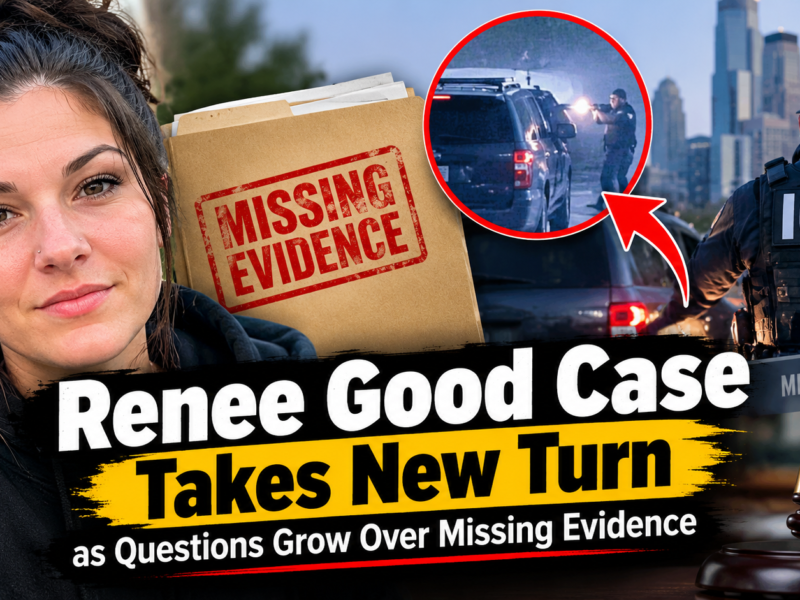
A fatal shooting involving an Immigration and Customs Enforcement agent in Minneapolis quickly became much larger than a single confrontation.
The death of Renee Nicole Good, a 37-year-old mother of three, triggered protests, political arguments and intense scrutiny of federal immigration operations in Minnesota. At the same time, U.S. officials said the ICE agent involved became the target of threats and online harassment following the shooting.
The case has remained controversial because officials and publicly circulated video footage produced sharply different interpretations of what happened.
What Happened in Minneapolis?
The shooting occurred during a period of intensified federal immigration enforcement in Minnesota.
According to the original account from federal officials, Good’s vehicle became involved in an encounter with ICE officers, and the agent who fired the fatal shot claimed he was acting in self-defense.
However, video footage from the scene became an important part of the public discussion. Reporting at the time said the footage appeared to show Good’s vehicle moving away from the agents rather than simply driving directly toward them.
That difference between the official description and what viewers believed they could see in the footage became one of the central issues surrounding the case.
Why Was ICE Conducting Operations in Minnesota?
Thousands of federal immigration agents had been deployed to Minnesota in January 2026 as part of a major immigration-enforcement operation.
Federal authorities described the operation as an effort targeting people they alleged were involved in serious crimes and immigration violations. The deployment occurred amid broader political conflict over immigration enforcement and allegations of fraud in Minnesota.
The operation quickly became a major source of tension between federal officials, state and local authorities, protesters and immigrant-rights organizations.
The Shooting Sparked Protests
News of Good’s death spread rapidly.
Demonstrations were reported in Minneapolis and other major American cities as protesters demanded answers about the circumstances surrounding the shooting and the use of deadly force by federal immigration officers.
The incident also became part of a broader national debate over the role of ICE and how federal immigration operations should be conducted in communities.
At the same time, supporters of federal immigration enforcement argued that officers working in increasingly tense environments also faced serious safety risks.
Officials Said the ICE Agent Received Threats
Following the shooting, U.S. officials said the ICE agent involved faced threats and online harassment.
Officials reportedly said additional security precautions were taken to protect the agent and his family. The original report also stated that the agent was receiving counseling after the incident.
Threats against law-enforcement personnel became a separate issue from the shooting itself.
Federal prosecutors have subsequently pursued cases involving alleged threats against ICE personnel connected to the Minneapolis conflict. For example, the Justice Department announced charges in February 2026 against a Minneapolis man accused of making threats against federal immigration officers; the department emphasized that the allegations in a criminal complaint are charges, not proof of guilt.
Another Michigan man was later sentenced after pleading guilty to threatening ICE agents working in Minneapolis.
Why the Evidence Became So Important
One of the biggest questions surrounding the Minneapolis shooting was whether the initial official account completely matched the available evidence.
That question became especially significant because video recordings of federal immigration encounters were increasingly being examined by journalists, attorneys and members of the public.
Stateline reported in January that several encounters involving federal immigration agents had generated disputes between official accounts and publicly available video or other evidence.
This does not by itself establish what happened in every individual incident. Instead, it demonstrates why independent evidence and formal investigations became so important.
The Minneapolis Operation Produced Other Legal Controversies
The shooting involving Good was not the only Minnesota incident that later faced legal scrutiny.
In another Minneapolis case, ICE agent Christian Castro was charged in connection with the January 14 shooting of Venezuelan migrant Julio Cesar Sosa-Celis. Hennepin County prosecutors accused Castro of assault and falsely reporting a crime.
By September 2026, Castro had also been indicted federally on charges alleging that he misled investigators about the circumstances surrounding that shooting. His attorney disputed the allegations and said Castro intended to fight the charges.
That later development is important because it shows that scrutiny of federal immigration operations in Minneapolis continued well beyond the original January protests.
A Broader Debate Over Federal Immigration Enforcement
The Minneapolis shooting became a symbol of a much wider disagreement in the United States.
Supporters of ICE have argued that federal officers need protection while carrying out immigration laws and that threats against them should not be tolerated.
Critics, meanwhile, have called for greater transparency, independent investigations and closer examination of the use of force.
These competing arguments have made the Minneapolis events particularly difficult to separate from the country’s larger political debate over immigration.
What We Know—and What Remains Disputed
Several facts surrounding the broader Minneapolis operation are documented, but some interpretations of individual encounters remain contested.
Documented developments include:
- Renee Nicole Good was killed during an encounter involving an ICE agent in Minneapolis in January 2026.
- Federal officials described the shooting as an act of self-defense.
- Video footage prompted questions about portions of the initial official account.
- Officials said the agent involved faced threats and harassment.
- Separate criminal cases were later brought against people accused of threatening ICE officers.
- Another ICE agent involved in a separate Minneapolis shooting later faced criminal charges.
What remains important is distinguishing allegations, official statements, video evidence and court findings rather than treating every claim surrounding the controversy as an established fact.
Why This Story Continues to Matter
The Minneapolis shooting raised questions that extend beyond one incident.
It placed the safety of federal officers alongside questions about civilian safety, transparency, accountability and the use of deadly force.
It also demonstrated how quickly a local confrontation can become a national political story when immigration enforcement, law enforcement and competing versions of events collide.
As legal proceedings and investigations continue, court records, verified video evidence and official findings remain more reliable than social-media claims or politically charged interpretations.
Final Thoughts
The Minneapolis ICE shooting remains a deeply disputed event, but the subsequent developments show why careful examination of evidence matters.
Renee Nicole Good’s death sparked nationwide attention, while the ICE agent involved reportedly faced threats afterward. Subsequent prosecutions connected to threats against immigration officers and separate criminal proceedings involving another ICE agent have kept the broader Minneapolis enforcement operation under scrutiny.
The story is therefore not simply about one shooting. It is also about how federal immigration enforcement, public protests, law-enforcement safety and demands for accountability intersect in an increasingly polarized environment.