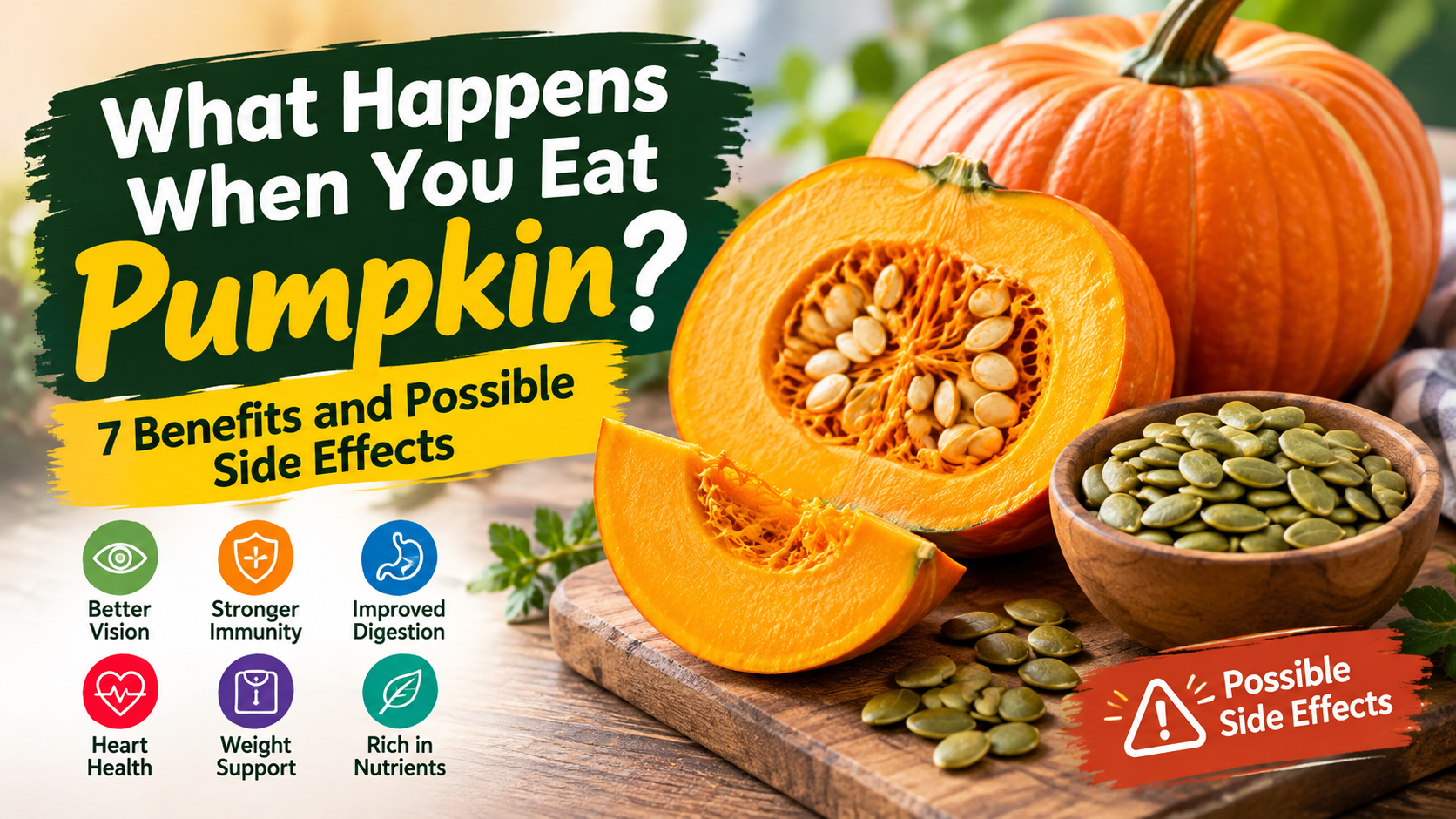
Pumpkin is often associated with autumn decorations, comforting soups, and homemade pies. However, this colorful food offers much more than seasonal flavor. Pumpkin contains important nutrients, including beta-carotene, potassium, and dietary fiber, that can contribute to a balanced and nutritious diet.
But is eating pumpkin every day a good idea? Can it cause digestive discomfort, and does the way you prepare it make a difference?
The answer depends on your portion size, overall diet, preparation method, and individual health needs. Let’s explore the potential benefits of pumpkin, the precautions worth knowing, and simple ways to include it in your meals.
1. Pumpkin Provides Important Vitamins and Minerals
One of the biggest reasons to add pumpkin to your diet is its nutritional value. Plain cooked pumpkin is relatively low in calories and contains nutrients that support normal body functions.
Its orange color comes largely from beta-carotene, a plant compound that the body can convert into vitamin A. Pumpkin also provides potassium, vitamin C, and smaller amounts of other vitamins and minerals.
These nutrients contribute to several important processes, including maintaining normal vision, supporting immune function, and helping the body use energy effectively.
Why it matters: Eating a variety of colorful vegetables is a practical way to obtain different nutrients without relying on supplements alone.
2. It Can Support Healthy Digestion
Pumpkin contains dietary fiber, although the amount varies depending on the type and preparation. Fiber helps support regular bowel movements and contributes to a healthy digestive routine.
Pumpkin also contains water, which adds to its value as part of a balanced diet. When combined with other fiber-rich foods, it can help people work toward an adequate daily fiber intake.
However, suddenly eating large amounts of fiber may cause gas, bloating, or abdominal discomfort, particularly if your usual diet is low in fiber.
A helpful tip: Introduce fiber-rich foods gradually and drink enough fluids throughout the day.
3. Pumpkin Supports Normal Vision
Pumpkin is a source of beta-carotene, which the body can convert into vitamin A when needed. Vitamin A plays an essential role in normal vision, especially in low-light conditions.
Getting enough vitamin A is important for maintaining healthy eyes. Pumpkin can contribute to this intake alongside foods such as carrots, leafy green vegetables, and sweet potatoes.
However, eating pumpkin does not guarantee perfect eyesight or cure existing eye conditions. Its benefits are best understood as part of an overall nutritious eating pattern.
4. It Can Be a Useful Food for Weight Management
Plain pumpkin is relatively low in calories compared with many rich, creamy, or sugary foods. Its water content and some dietary fiber can also help make meals more satisfying.
For example, adding cooked pumpkin to a vegetable soup or serving it as a side dish can increase the volume of a meal without necessarily adding many calories.
The important distinction is how the pumpkin is prepared. Pumpkin pie, sweetened pumpkin drinks, and desserts made with large amounts of sugar, butter, or cream can contain considerably more calories.
A practical approach: Choose roasted, steamed, or mashed pumpkin with modest amounts of added fat and sugar when you want a lighter option.
5. Pumpkin Contains Nutrients That Support Heart Health
Potassium is an essential mineral involved in normal muscle function, nerve signaling, and fluid balance. It also plays a role in maintaining healthy blood pressure.
Pumpkin contributes potassium to the diet, while its overall nutritional profile can complement a heart-conscious eating pattern that includes vegetables, fruits, legumes, and whole grains.
Nevertheless, no single food can prevent heart disease or replace treatment for high blood pressure.
People with kidney disease or those taking certain medications that affect potassium levels may need individualized dietary guidance. If this applies to you, ask your healthcare professional whether potassium-rich foods fit your eating plan.
6. Pumpkin Seeds Offer Additional Nutritional Benefits
Pumpkin seeds are different nutritionally from the flesh of the pumpkin. They contain protein, unsaturated fats, magnesium, zinc, and other nutrients.
A small portion of plain, unsalted pumpkin seeds can be added to oatmeal, salads, yogurt, or homemade trail mix.
Because seeds are more calorie-dense than pumpkin flesh, portion size is worth considering if you are monitoring your energy intake. Packaged varieties can also contain considerable amounts of added salt or seasoning.
For the best everyday option, choose plain or lightly roasted seeds and check the nutrition label on packaged products.
7. Pumpkin Can Add Variety to a Balanced Diet
Healthy eating becomes easier when nutritious ingredients are enjoyable and versatile. Pumpkin can be used in savory and sweet recipes, making it simple to add variety to everyday meals.
You can blend cooked pumpkin into soup, stir it into oatmeal, mix it into whole-grain pancake batter, or combine it with beans and spices for a hearty meal.
Its mild flavor works well with ingredients such as cinnamon, ginger, garlic, black pepper, and herbs.
Remember that pumpkin does not need to be eaten every day to be beneficial. A varied diet that includes different vegetables and fruits is generally a better goal than relying heavily on one ingredient.
Can Eating Pumpkin Cause Side Effects?
For most people, plain pumpkin prepared as food is a reasonable part of a balanced diet. Still, several factors may affect how your body responds.
Digestive Discomfort
Eating a large serving, particularly when increasing fiber intake quickly, may lead to gas, bloating, or changes in bowel movements. Start with a moderate portion if you are not accustomed to eating pumpkin.
Added Sugar and Calories
Pumpkin itself is not the same as pumpkin-flavored desserts or sweetened beverages. Pies, pastries, and sweet drinks may contain added sugars and fats that change the overall nutritional profile.
Choose plain pumpkin more often if you want to enjoy its nutrients without unnecessary additions.
Individual Allergies or Sensitivities
Although uncommon, food allergies can occur. Stop eating pumpkin if you develop symptoms that suggest an allergic reaction. Seek emergency medical help if you experience difficulty breathing, throat swelling, or other signs of a severe reaction.
Special Dietary Considerations
People with kidney disease or specific potassium restrictions should follow the advice of their healthcare team. The appropriate amount of pumpkin and other potassium-containing foods depends on individual circumstances.
What Is the Healthiest Way to Eat Pumpkin?
How you prepare pumpkin can make a meaningful difference to the overall meal.
Here are a few simple ideas:
- Roasted pumpkin: Cut edible pumpkin into cubes, add a small amount of olive oil and herbs, and roast until tender.
- Pumpkin soup: Blend cooked pumpkin with onions, garlic, and low-sodium broth.
- Pumpkin oatmeal: Stir plain pumpkin puree into oatmeal and add cinnamon for flavor.
- Pumpkin and bean bowls: Combine roasted pumpkin with beans, whole grains, and leafy greens.
- Pumpkin seeds: Use a modest serving of unsalted seeds as a crunchy topping.
When buying canned pumpkin, read the label carefully. Choose plain pumpkin puree rather than pumpkin pie filling if you want to control the amount of added sugar.
Also, use pumpkin varieties intended for cooking. Large decorative pumpkins may have a less pleasant texture and flavor than culinary varieties.
Should You Eat Pumpkin Every Day?
For many healthy adults, eating a moderate amount of pumpkin regularly can fit comfortably into a balanced diet. However, there is no universal daily amount that everyone needs to follow.
Your ideal portion depends on your overall food intake, digestive tolerance, health conditions, and dietary preferences.
The most important principle is variety. Pumpkin can contribute useful nutrients, but it should complement other vegetables, fruits, whole grains, protein sources, and healthy fats rather than replace them.
Final Thoughts
Pumpkin is more than a seasonal ingredient. It provides beta-carotene, potassium, and other nutrients that can support normal vision, digestion, and overall nutritional health.
The main concerns are usually related to individual tolerance, specific medical dietary restrictions, or the extra sugar and fat added to pumpkin-based products.
Enjoy pumpkin in simple recipes, pay attention to portion sizes, and choose preparations that fit your nutritional needs. As with most foods, balance and variety matter more than eating one ingredient in large quantities.
Disclaimer: This article is for general educational purposes only and is not a substitute for personalized medical advice. Consult a qualified healthcare professional about dietary changes if you have a medical condition or specific nutritional restrictions.